 10/11/2026
Faculty of Pharmacy and Deanship of Graduate Studies and Scientific Research at Applied Science Private University Strengthen National Dialogue and Institutional Collaboration for Sustainable Pharmaceutical Security
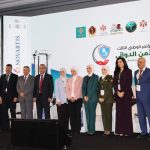
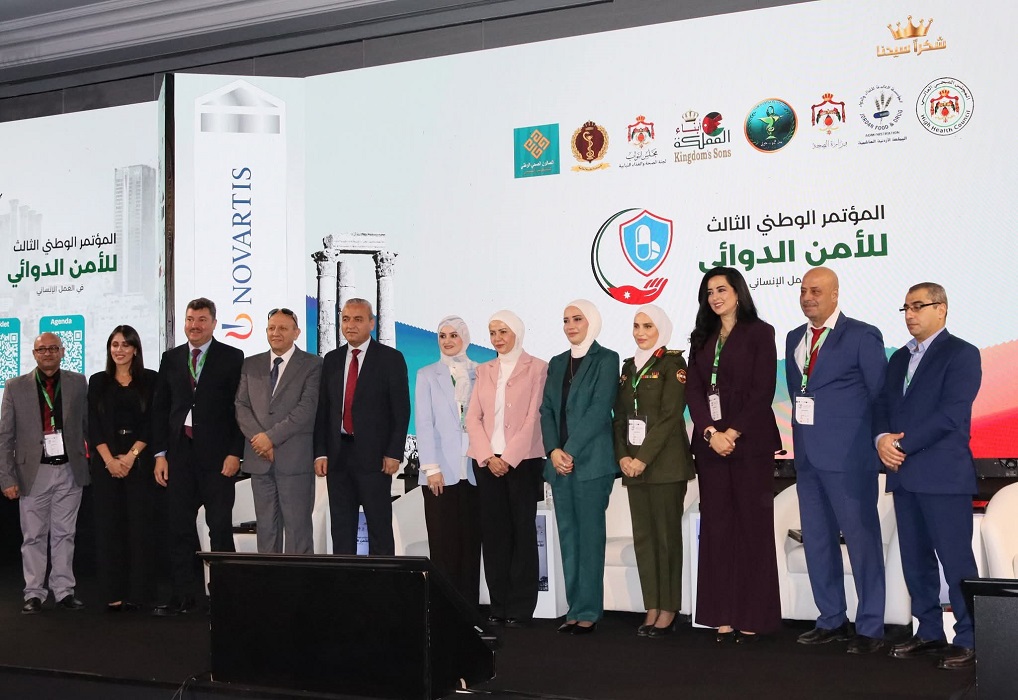
As part of the commitment of the Faculty of Pharmacy at Applied Science Private University, in collaboration with the Deanship of Graduate Studies and Scientific Research, to strengthening the university’s role in community service and contributing to discussions addressing national healthcare challenges, Professor Muna Barakat, a faculty member of the Faculty of Pharmacy and Dean of Graduate Studies and Scientific Research at the university, participated in the Third National Conference on Pharmaceutical Security in Humanitarian Action. The conference brought together distinguished experts, specialists, and representatives of governmental, healthcare, academic, and pharmaceutical-sector institutions.
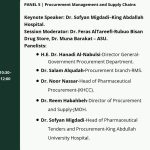
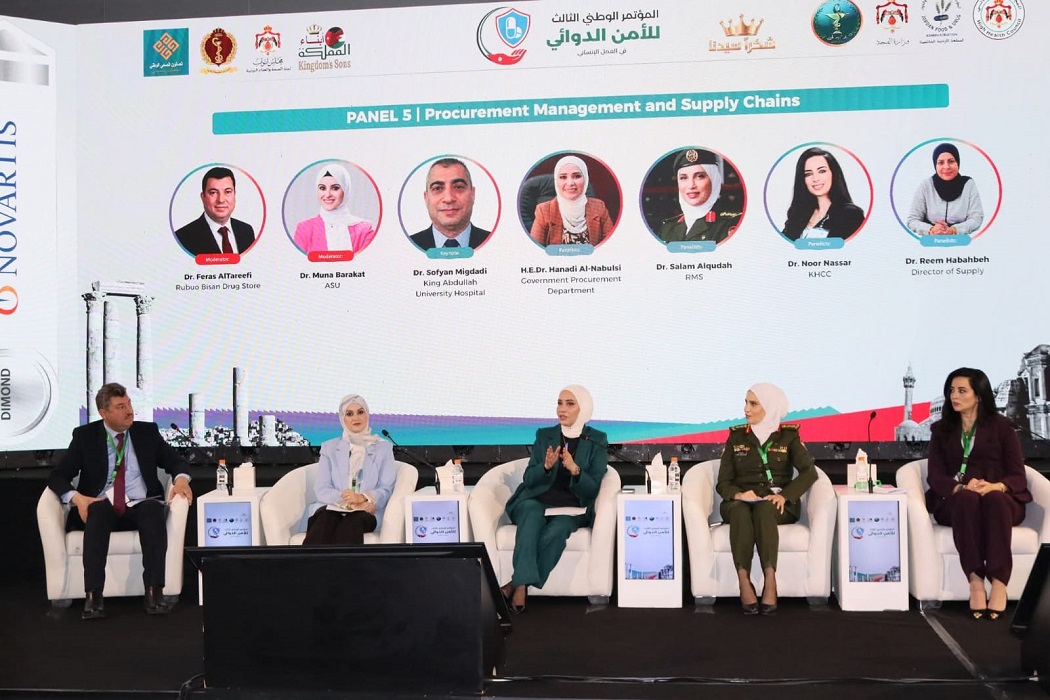
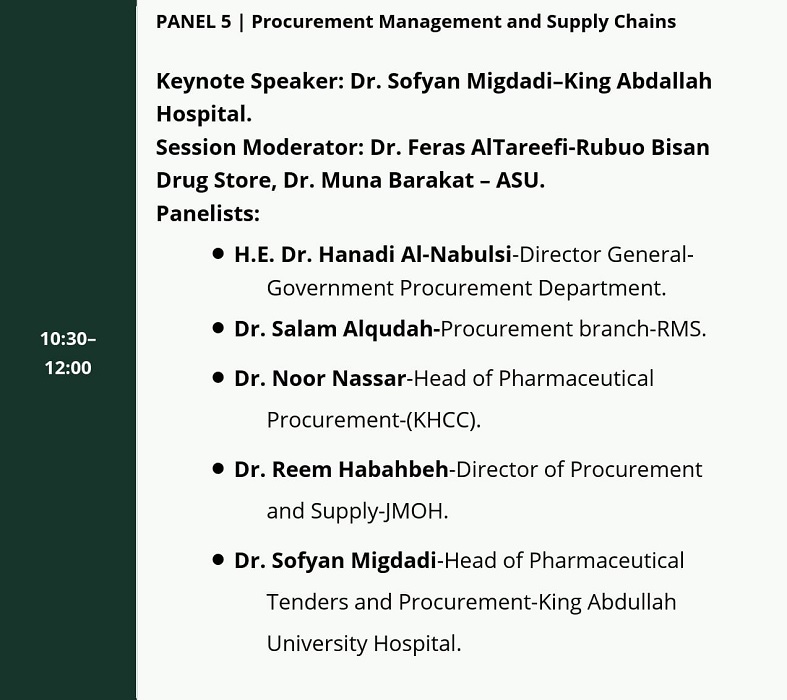
Professor Barakat’s participation involved co-moderating the fifth scientific panel, entitled “Procurement Management and Supply Chains,” alongside Dr. Feras Al-Tareefi of Rubuo Bisan Drug Store. The session addressed an important area related to ensuring the continuous availability of medicines and medical supplies, as well as improving the efficiency of procurement and supply operations within healthcare institutions.
The session featured a distinguished group of leaders and experts in pharmaceutical procurement and healthcare supply management, including H.E. Dr. Hanadi Al-Nabulsi, Director General of the Government Procurement Department; Dr. Salam Alqudah of the Royal Medical Services; Dr. Noor Nassar, Head of Pharmaceutical Procurement at King Hussein Cancer Center; and Dr. Reem Habahbeh, Director of Procurement and Supply at the Jordanian Ministry of Health. Dr. Sofyan Migdadi of King Abdullah University Hospital also participated as the keynote speaker.
This scientific session provided a platform for dialogue and the exchange of knowledge and expertise among representatives of academic, governmental, and healthcare institutions. Discussions focused on pharmaceutical procurement management, supply chains, and the challenges healthcare institutions face in planning pharmaceutical requirements and ensuring continuity of supply.
These topics are particularly significant in light of the challenges confronting healthcare systems at both national and international levels. Efficient procurement and supply chain management are essential to maintaining the continuity of healthcare services, strengthening institutional preparedness, and mitigating risks associated with supply disruptions and shortages of pharmaceutical products.
This participation also highlights the complementary roles of the Faculty of Pharmacy and the Deanship of Graduate Studies and Scientific Research in strengthening the university’s academic and institutional presence at specialized national conferences, while fostering connections between academic knowledge and practical expertise within healthcare institutions.
In relation to Sustainable Development Goal 3 (SDG 3: Good Health and Well-being), the Faculty of Pharmacy’s participation addresses fundamental issues affecting the continuity of healthcare services, particularly the availability of medicines and medical supplies and the efficiency of pharmaceutical supply systems. This underscores the importance of pharmaceutical security in supporting individual health and community well-being.
Regarding Sustainable Development Goal 17 (SDG 17: Partnerships for the Goals), this participation is particularly relevant because it contributed to a dialogue involving academic institutions, government authorities, healthcare organizations, and the pharmaceutical sector. Such engagement promotes the exchange of knowledge and expertise and facilitates discussions of shared challenges that require cooperation across different sectors.
The participation is also aligned with Sustainable Development Goal 4 (SDG 4: Quality Education) by supporting the exchange of specialized knowledge, connecting academic and research expertise with practical challenges facing healthcare institutions, and highlighting the role of higher education and scientific research in contributing to professional and national discussions.



 العربية


.svg)